Killing Black Mold With Bleach
Does Bleach Kill Black Mold? What Homeowners Need to Know
Black mold can be alarming to find in your home, and bleach is often the first cleaner people think to use. However, bleach is not usually the best solution for black mold, especially on porous materials like drywall, wood, grout, and unsealed concrete.
According to guidance commonly referenced from agencies like the U.S. EPA and CDC, bleach may help clean mold from hard, non-porous surfaces, but it is not considered a reliable long-term solution for porous materials. In many cases, bleach only removes surface staining while mold continues growing underneath.
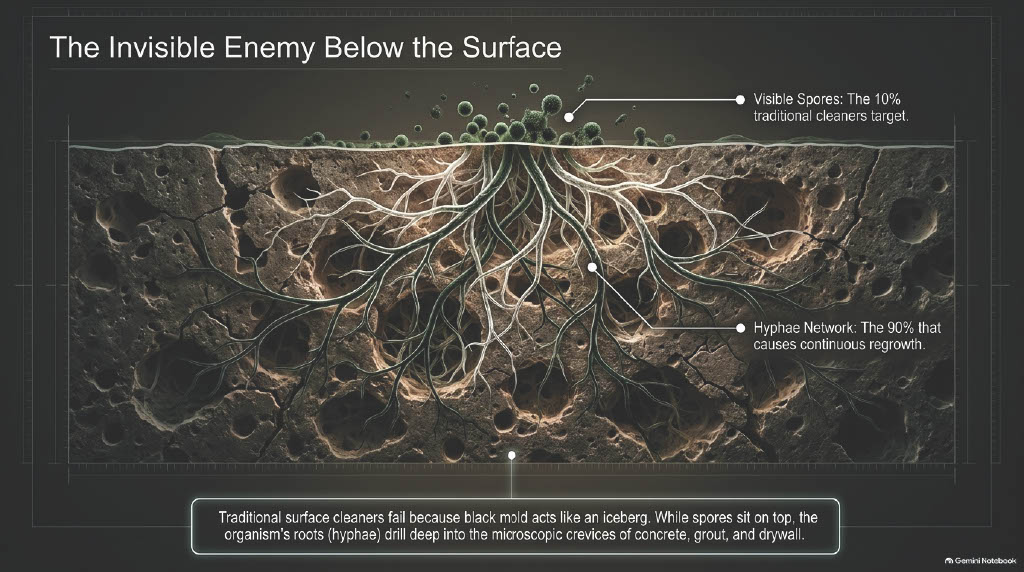
Learn about black mold roots
Why Bleach Is Not Recommended for Black Mold on Porous Surfaces
Bleach can make mold look like it is gone, but that does not always mean the mold has been fully removed. Porous materials absorb water and allow mold to grow below the surface, where bleach often cannot reach.
Common reasons bleach fails on black mold include:
• It does not penetrate deeply into drywall, wood, grout, or concrete
• It can leave behind mold roots and spores
• It may only whiten the stain instead of eliminating the growth
• Its water content can add moisture to already damp materials
• Mold often returns if the underlying moisture problem remains
Why Bleach Sometimes Makes the Problem Look Better Without Solving It
One reason bleach is misleading is that it changes the appearance of mold very quickly. The black or dark green staining may fade, making the area appear clean. But if mold is growing inside a porous surface, the contamination may still be present even after the stain disappears.
This is why visual improvement alone should not be treated as proof that the mold problem is solved.
This is where Simix Hydrogen Peroxide Cleaner comes in.


When Bleach Can Be Used for Mold
Bleach can be effective in certain limited situations. It is best suited for hard, non-porous surfaces where mold is sitting on top rather than growing into the material.
Examples include:
• Glazed ceramic tile
• Glass
• Metal
• Non-porous vinyl
• Sealed, non-porous countertops
If mold is on drywall, insulation, carpeting, ceiling tiles, or unfinished wood, bleach is generally not the best option.
How to Use Bleach Safely for Mold Cleanup
If you choose to use bleach on a hard, non-porous surface, basic CDC safety guidance includes the following:
1. Mix the Correct Bleach Solution
Use no more than 1 cup of bleach per 1 gallon of water.
2. Wear Protective Equipment
Use an N95 respirator, chemical-resistant gloves, and eye protection to reduce exposure to spores and fume 3. Ventilate the Area Well
Open windows and use fans that exhaust air outside to reduce bleach fumes indoors.
4. Apply and Let It Sit
Apply the solution to the affected non-porous surface and let it sit for about 10 Scrub, Rinse, and Dry Thoroughly
Scrub gently, rinse with clean water, and dry the area completely.
6. Never Mix Bleach With Other Cleaners
Do not mix bleach with ammonia, vinegar, or acidic products. Mixing chemicals can produce dangerous chlorine gas.
What Works Better Than Bleach for Black Mold?
The most effective approach to mold control is fixing the moisture source. Without correcting the dampness that allowed mold to grow, the problem often comes back.
A better long-term plan may include:
• Repairing roof leaks, plumbing leaks, or window leaks
• Improving airflow in bathrooms, kitchens, crawl spaces, and basements
• Using a dehumidifier in damp areas
• Removing and replacing mold-damaged porous materials
• Hiring a mold remediation professional for larger infestations
When to Call a Mold Remediation Professional
You should consider professional help if:
• Mold covers a large area
• Mold keeps returning after cleanup
• The affected material is porous or structural
• There is a strong musty odor throughout the home
• The mold was caused by sewage or contaminated water
• Someone in the home has asthma, allergies, or a compromised immune system
A trained professional can locate hidden moisture, identify contaminated materials, and recommend the safest removal method.
Final Takeaway
Bleach can help clean mold from hard, non-porous surfaces, but it is not usually the right solution for black mold on porous materials. In many cases, it only removes the visible stain while leaving mold growth underneath. For a lasting result, the moisture problem must be fixed and damaged materials may need to be removed or professionally treated.
Frequently Asked Questions
: Does bleach kill black mold on drywall?
No, not reliably. Drywall is porous, so bleach usually cannot penetrate deeply enough to kill mold growing beneath the surface.
Can bleach make black mold look gone when it is still there?
Yes. Bleach can whiten the stain and improve appearance, but mold may still remain inside the material.
What surfaces can bleach be used on for mold?
Bleach is best limited to hard, non-porous surfaces such as tile, glass, metal, and non-porous vinyl.
What is more important than using bleach?
Fixing the moisture source is more important than the cleaner itself. If moisture remains, mold often returns.
Is it dangerous to mix bleach with vinegar or ammonia?
Yes. Mixing bleach with vinegar, ammonia, or other cleaners can create toxic chlorine gas and should never be done.
Stop Slip and falls
Kill Bacteria Virus
Safe on all Surfaces